

Rating of
4.5/5
Mine Eyes Have Seen the Glory
Chris Kavan - wrote on 12/27/25
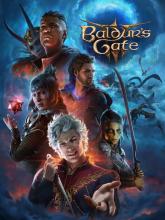
From rather humble beginnings to king of the modern-day RPG - or the type of tabletop, party-based cRPG that is the epitome of what the genre should be - Larian Studios has mostly walked their own path. Divinity: Original Sin and its sequel were both original creations - though very much inspired by D&D and the like - so when it was announced that they would be responsible for continuing one of the best non-Divinity RPGs - Baldur's Gate - I was both happy and intrigued. The wait was more than worth it, as Baldur's Gate 3 takes everything that made their Divinity games great just in a more familiar setting. But despite near-universal critical acclaim, Larian had some beef with Wizards of the Coast (who own D&D) and that essentially led to cutting all ties and leaving the game as is - no DLC, no other sequels and once again throwing Baldur's Gate into limbo. It's too bad but the modding community has come up with their own ways of extending the game and while it may not be "official" at least it allows for something beyond the (granted very robust) main game.
Looks and Stuff: Glorious. Everything about this game is a home run. The environments, the characters, the voice acting (VERY extensive), the music, the creatures, the story - it all coalesces into a truly memorable and impressive experience. There are some minor annoyances like the fact that the camera can be difficult at times (something carried over from the Divinity games). I also found that items marked as as "hey pick me up to read/sell" should have been marked "hey, I'm supposed to be RED, so touching me means you're a dirty thief" and thus would draw unwanted attention. The mechanics are also quite esoteric at times, even for a D&D veteran, and thus make sure you know what you're doing are be prepared to save scum or live with the consequences of your maybe accidental choices. Also, be prepared to save scum if you roll a natural 1 and don't want to live with those consequences, either.
The game doesn't hold your hand, either, meaning you are free to fully explore, uncover hidden secrets or die in horrible ways. NPCs are varied and say the darnedest things in the background and there are a lot of ways to approach any battle you find yourself in. Mostly the game is just fun - sometimes emotionally devastating, but still fun.
Story: While tangentially related to the first two Baldur's Gate games, this third entry takes place about a century into the future and has its own story and characters (with a few returning faces). At the beginning your chosen characters awakens inside a nautiloid ship, already infested with an Illithid tadpole - destined to become an Ilithid yourself after the cycle known as ceremorphosis completes. Essentially the tadpole eats your brain, takes over and transforms you. But the ship your are riding in crashed in the wilderness outskirts of Baldur's Gate and (provided you don't kill them) you find others in the same predicament. Thus you can form a party - our crew consisted of myself as Lae’zel, a githyanki fighter whose race has a deep-seated hatred of the Ilithid (and most other races have a deep-seated hatred of the githyanki), Matt was the literally hot-blooded tiefling barbarian Karlach, Nick as the half-elf cleric of Shar, Shadowheart - but soon to become conflicted and Nelson as the wizard Gale, who has to chow down on magic items or explode. Interestingly I think most of our roles changed over time - I went from fighter to ranger, Nelson become a smooth-talking bard and Matt just threw everything in site - Nick mostly stayed true to his healing/support role while firing off the occasionally useless spell (and missing more often than not). That is the thing, roles are very fluid and can change. Other characters include vampire Astarion and the Warlock with a demonic pact, Wyll. Other optional party members include the druid/bear lover Halsin and returning characters half-elf ranger Jaheira and the not-at-all mad Minsc (and his miniature giant space hamster Boo). You can also have a fully original character - a normal one or The Dark Urge if you want to be just damn evil the whole game.
After recovering from the crash the game gives you the macguffin of the Astral Prism - an artifact that somehow freezes the process of ceremorphosis while also giving you a dream companion to guide you towards saving yourself - and perhaps the entirety of the Sword Coast as well. As becomes apparent early on, the Sword Coast is in dire straights. Early on you find a druid circle under attack and learn that the goblins and other such creatures have become beholden to The Absolute - an entity that has ties to the Ilithids in some form - the first Act our of three is learning about this force as well as digging into the various stories of the individual characters.
The second act takes place in a land corrupted by this Cult of the Absolute - and finding new allies in the battle against them - while the third act finally lets you enter Baldur's Gate itself (or at least a part of it) where you learn three of the most powerful people in the city are tied directly to the Ilithid threat - and it's far more dire than you could have ever predicted. But this isn't half the story, as each character has their own personal demons to face - as Lae’zel, I must face the fact my entire race has been raised on a lie and must decide to perpetuate this or rebel and be cast out - and each character faces their own momentous decisions along the way. And there are so many interesting side characters as well - good and evil - just trust me, experiencing them yourself without spoiling anything is the way to go. I mean it took us nearly an entire year to complete this, and every minute was worth it.
Gameplay: If you played either of the preceding Divinity games, you should know what you're getting into. If you've played a D&D game, you should also know what you're getting into. The biggest change is relying on a purely D20 system, from everything to attacks to lock picking to talking your way out of a pickle - rolls will either succeed or fail, but there are plenty of modifiers to make things easier (though the dreaded Nat 1 can take you down at any time). If anything, Larian's Divinity style lends itself to making Baldur's Gate a better experience, including the way that elements work together and the throwing mechanics. Balance is a bit tricky - the first act seemed overly challenging at times while the third act was almost too much of a cake walk (even with the level cap). And given the end certainly hints at more to come - it's too bad it's never going to happen (at least from this competent of a studio) and we'll just have to hope whatever Larian has up their sleeves will be as good, if not better, than what they've delivered thus far.
Replay value: Given the sheer amount of customization between characters - not to mention a robust modding community - Baldur's Gate 3 could potentially never end.
Final Verdict: Provided you have the time, you will be impressed.
Presentation: 5/5
Story: 4/5
Gameplay: 4/5
Replay: 5/5
Overall (not an average): 4.5/5
Hours Played: 118.8
Cheevos: 44% (24/54)

