

Rating of
4/5
Gnosticism for the ‘Skyrim’ Crowd
Nelson Schneider - wrote on 11/21/26
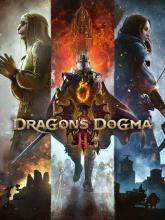
The release of “Dragon’s Dogma 2” came 12 years after the 2012 release of the original “Dragon’s Dogma,” and 11 years after the release of the “Dark Arisen” expansion, which fixed the base game’s most glaring flaws and added a beefy amount of new content to boot. It seemed that ‘Dragon’s Dogma’ may have been destined to be a ‘one-and-done’ situation, with a watered-down PlayStation Vita spinoff, “Dragon’s Dogma Quest” in 2013, and an MMO, “Dragon’s Dogma Online” in 2015, both proving to be flops unworthy of global releases.
However, in the mid-2020s, Capcom has been on a bit of a roll with reviving dormant IPs while also producing a variety of new content, so the 2024 release of “Dragon’s Dogma 2” shouldn’t have come as a surprise... moreover, neither should the game launching in a rather dismal state, with several grotesque microtransactions and built-in tedium meant to push players toward those microtransactions. After all, the original “Dragon’s Dogma” suffered from the exact same issues – that is, until “Dark Arisen” came along and fixed everything. Thus, it came as no surprise that a short time after launch – and with Steam user scores sitting at a stubborn “Mixed” – Capcom replaced the game’s leadership team and “Dragon’s Dogma 2” received its very own “Dark Arisen” expansion... unfortunately with the very same name as the first game’s expansion.
Regardless of naming conventions, like the endless cycle at the core of ‘Dragon’s Dogma’s’ narrative, “Dragon’s Dogma 2: Dark Arisen” (“DD2DA”) once again, removed all of the irritations and sticking points – including microtransactions – and added a hefty chunk of new content to the already sizable base game. The result is, unsurprisingly, more of what the original “Dragon’s Dogma” offered... SIGNIFICANTLY more! Yet, instead of spinning its wheels and feeling like a rehash, “DD2DA” does break new narrative ground while also offering a revised and more polished version of the core gameplay that defined the original.
Presentation
“DD2DA” us built in Capcom’s proprietary RE Engine – used, most notably, in the creation of modern ‘Resident Evil’ games and remakes of legacy games in that series. The results of using this in-house engine to create an massive open world game instead of a claustrophobic survival horror title are somewhat shocking. “DD2DA” looks incredible, from natural environments to urban environments to subterranean environments, to people and monsters (both large and small). Load times are incredibly brisk and snappy, there’s never any noticeable pop-in or texture streaming issues, and, true to the series’ history, light effects are incredibly realistic, with night time being thoroughly DARK, with only the party’s lanterns to light the way.
Though, while the engine is perfectly capable of creating good-looking player characters and NPCs, for some reason, Capcom chose to populate the world of “DD2DA” with a huge quantity of uggos... just, like, truly hideous people who are hard to look at. There’s also evidence of unfortunate influence from Western activist groups, as “DD2DA” doesn’t use “male” and “female” as character gender designators, but rather “masculine” and “feminine,” seemingly in an attempt to appease Trans extremists – oddly enough, nearly all of the “official” Capcom-created Pawns available to recruit have names that are the opposite of their gender expression. The character generator in “DD2DA” still is only “okay” at making nice-looking characters, while “excellent” at making freaks... and many players seem to delight in this, unleashing some truly unfortunate-looking Pawns upon the game world (either that, or realizing that “sex sells” and creating the most attractive Pawns possible in order to ensure other players want to recruit them).
Also, unlike the original “Dragon’s Dogma,” there are now a variety of races in the world, with players and Pawns able to be either Human of Beastren... and Beastren are literally just Furries who look like big cats. There are only 2 Dwarves (both men... and one is married to an Elf) in the world, but there’s an entire settlement of Elves – who, hilariously, only speak Elvish, requiring the player to recruit a translator or teach their own Pawn Elvish in order to interact with them in any meaningful way. Unfortunately, though, the tip-toeing around gender isn’t the only form of Woke signaling in “DD2DA,” as the Human characters come in the full spectrum of real-world skintones, hair textures, and facial phenotypes... all without any reasonable explanation for why all of these different ethnicities exist on a single ocean-bound continent with a culture rooted firmly in late-medieval Europe. Racism is occasionally addressed, though only between Humans and Beastren or between Dwarves and Elves, and only in the weakest and most cursory way, with any deeper explanations of inter-group relations and history swept under the rug and treated as either non-existent of unimportant.
This “blank slate” mentality towards characters also extends to the audio, with only a handful of voices available for NPCs of each gender. It’s entirely possible to accidentally assign a “masculine” voice to a “feminine” Pawn (or vice versa), while it’s even more jarring to hear a distinctively African-American voice coming out of a non-Black character (and vice versa). Regardless of this negative activist influence, the voice-acting and delivery by major NPCs is all well-done, even if some combinations of appearance and voice for less-important characters can be jarring. The soundtrack is likewise well-done and very similar to the previous game’s, with mostly subtle ambiance suddenly swelling forth into the main battle theme when danger draws near. The battle theme itself is the same returning tune it was in the first game, complete with dynamic changes based on the player’s performance and how close to “dead” the current foe (or group of foes) happens to be.
Technically, “DD2DA” is merely acceptable, with a handful of major issues on PC. The game will not run in exclusive full-screen without experiencing a full-system driver crash, making Borderless Window the only way to go. The opening splash screens and logos refuse to honor the Borderless resolution, and instead run in their own arbitrarily-small Windows before letting the game engine take over. Fortunately, I only experienced one crash-to-desktop during my time with the game, so the stability is good once the game is actually running. The game also tends to auto-select system settings quite poorly, requiring manual changes to quite a few graphical settings in order to make things actually look good. I was pleasantly surprised, though, by just how high I could push the settings on my RTX 3060 while still maintaining stable framerates and fan speeds.
The game is fairly standard in its suite of QoL features, with configurable controls for both keyboard and controller players, native Xinput support that just works out of the box, and a configurable UI with the basics of mini-map rotation, health bars, and the like. Overall, if it weren’t for the aggravation of getting the game running and configuring its graphics settings for the first time, combined with the audio-visual baseline levels of Woke needling, there would be nothing to criticize, here.
Story
The titular “dogma” in the ‘Dragon’s Dogma’ series is a great cycle that endlessly repeats through infinite worlds. Through a phenomenon known as The Rift, Pawns – a type of not-really-a-person person – can wander the many worlds, always in search of an Arisen to serve. The Arisen is chosen by the Dragon, the Arisen must then slay the Dragon, before becoming the Sovran and ruling over a brief Golden Age before a new Dragon appears. This cycle is established, but not really elaborated upon, in the original “Dragon’s Dogma,” while “DD2DA” explores what happens when someone other than the Arisen attempts to break the cycle, as well as what can go awry if the Arisen strays from the straight and narrow path.
Our story opens with our own custom-created hero slaving away at an archaeological excavation site, surrounded by other Pawn. The fact that these Pawns are serving a middle-manager and NOT the Arisen is the first sign that something is up, but after a cinematic run for freedom, our character’s memory starts to return, they recall the moment they attacked the Dragon as it laid waste to a village, while every other soldier fled. They remember being pinned down by one great claw and having their still-beating heart plucked from their chest and swallowed by the beast: They remember becoming Arisen.
Soon, our Arisen arrives at Vermund, the capital city of the Human side of the continent, and hears tell of a coronation of the Sovran, who was still convalescing after his glorious victory over the Dragon. Fortunately, our Arisen soon runs into a sympathetic ear in the captain of the royal guard, Captain Brandt, whose suspicions about the authenticity of the Sovran about to take the throne lead him to believe that the Queen Regent is trying to pass off a pretender.
Thus it falls to our Arisen to unravel both this conspiracy as well as to right all the wrongs in the kingdom, and maybe also tracking down a certain Dragon and giving it a case of the old dogma. However, this tale isn’t as straightforward as it at first seems, with dark magicks and deep philosophical questions about Human Will and the nature of the cycle. The “Dark Arisen” expansion further expands on these themes by introducing the Arisen to an isolated Northerly region called Norgen, which is a frozen memory of a fallen kingdom, cursed by the presence of an Undying Dragon.
Across both the base game and the expansion, “DD2DA” does a much better job than its predecessor of revealing the surprisingly deep philosophical ideas that underpin the entire narrative. Indeed, while the first game came and went with little exposition for the “hows” and “whys” of its narrative, “DD2DA” explores a philosophy that mirrors Hellenistic Gnosticism, with a little bit of Daoism wedged in there, because how else would a Japanese dev studio come to grips with something like Gnosticism besides through their own, preexisting, similar framework?
The Gnostic influence runs deep in “DD2DA,” ranging from a world populated by 3 types of people (in-game, Mortals, Pawns, and Arisen; in-philosophy, Hylics, Psychics, and Pneumatics); the construction of a “life” being a combination of Body, Soul, and Will; to the world being an endless cycle of destruction and re-creation, watched over by a passive a-moral entity. Of course, this is all pop-philosophy, much like how Bungie’s ‘Destiny’ games may-or-may-not have been attempting to present a pop-philosophy version of Platonism, but in this case, the concepts presented are more overt and less likely to be my own personal insertions.
Aside from its explorations of philosophy, though, “DD2DA” is filled with tons of exploration and side content, allowing the player to get to know the world and its characters. The game’s politics aren’t particularly deep and rely heavily on pre-existing tropes and concepts, while side-quests are either the type of thing that literally throws itself at the player as soon as they come within a mile of the questgiver NPC, or the type of thing that most players will miss if they don’t consult the Wiki at least once or twice. Still, there’s a lot of content to experience within the game’s questing system, and even more free-form content that they player is free to engage with (or not) at their will.
It took me about 90 hours to experience everything the base game had to offer, and an additional 70 hours to explore Norgen and squeeze every ounce of entertainment out of the expansion pack. I ended up with 166 total hours played, and I can definitively say that I never got bored with the game. However, I can also definitively say that, like every massive Sandbox game, I wouldn’t go back and start a New Game+ anytime soon, if ever.
Gameplay
Like its predecessor, “DD2DA” is mostly an Action/RPG that revolves around exploration and combat. Exploration is massively improved in “DD2DA” compared to the original game, as the world is significantly larger. While in the original “Dragon’s Dogma,” I primarily remember running back and forth between the main city and a mine, “DD2DA” is way beyond that. There are two major cities – Vermund and BakBattahl – which each sit at the heart of their own unique regions, with Norgen getting its own vaguely-named Settlement as its hub. Outside of these main cities are a handful of smaller villages and town connected by roads, but there are also gobs and gobs of side routes, animal trails, and other off-the-beaten-paths to follow, nearly all of which lead to something at least moderately interesting. There are copious caves and dungeons to stumble upon, chests hidden everywhere, and Seeker Tokens for the most ardent explorers to collect in exchange for exclusive loot from the Vocation Guild.
Vocations are the Job System in “DD2DA,” and almost all of them are back from the first game, but a few things have been changed around. Instead of the Strider class that combined archery and daggers, “DD2DA” now has a dedicated Archer class and a Thief class for those two weapon types. The Mystic Swordsman has been replaced by a Mystic Spearhand, who is very similar to ‘Final Fantasy’s’ leaping Dragoon class (with the added bonus of having all of its skill names spelled like Chaucer went on a bender). In addition, most of the “advanced” Vocations need to be unlocked by finding a teacher somewhere in the world – these same teachers also unlock the capstone abilities for all of the Vocations. In general, I thought most of the melee classes were much improved over their previous incarnations (though Warrior is still a slow turd and pretty useless), while the dedicated caster classes of Mage and Sorcerer feel much less enjoyable to actively play, as enemies always seem to break off to attack a caster who starts incanting a slow top-tier spell. Aside from the Mystic Spearhand, there are two other new Vocations that are only available to Arisen (not Pawns): The Trickster and the Warfarer. The Trickster is a complete disaster (perhaps a trick on the players by the developers) as it is a 100% pacifist Vocation that exists primarily to kite enemies while the players Main Pawn and up to 2 recruited Pawns from other players take care of the actual “killing” part of combat. The Warfarer, on the other hand, is magnificent, allowing the Arisen to equip a bunch of different weapons from different Vocations all at once, and cycle between them as the need arises. After I mastered all the Vocations, I spent the rest of the game as a Warfarer with a Bow, Magick Bow, Spear, ArchStaff, and (begrudgingly) a Trickster Censer, since equipping a Vocation’s weapon allows access to all of its passive skills. The only real downsides to the Warfarer are how many in-game hours it takes to master all the other Vocations (thus giving the Warfarer access to their skills and passives) as well as the fact that there are only 6 active weapon skill slots – period, not per-weapon – which means that a Warfarer will typically only have access to 1 or 2 active weapon skills per weapon equipped – maybe even zero!
All of the Vocations feel like very different animals from each other. Most Vocations have no way to avoid damage aside from “don’t stand there,” while the Fighter can block with a shield, the Mage can block with a magick barrier, and the Thief can use a very snappy and responsive dodge. Some Vocations have active skills, such as the Warrior’s ability to reflect incoming attacks and the Mystic Spearhand’s ability to jump at the last minute to effectively dodge, but the rest are sitting ducks if the party of Pawns doesn’t control the flow of combat.
The Pawn system – AI controlled companion characters who can be recruited from other players via the Internet – was one of the big innovations of the original “Dragon’s Dogma,” and it’s very similar to how it always was in the sequel, but with some improvements. Pawns have a lot more – and a lot more useful – things to say now. Other players’ Pawns will even volunteer quest and treasure information, frequently leading the party to where they need to go next or showing them some hidden goodies their Master found. While they may be smarter and more vociferous than they were in the first game, Pawns still have problems with platforming, and will frequently kill themselves by falling into water (instant death for Pawns, whereas the Arisen simply gets spat out back on shore) or fail to keep up with the player while exploring complex world geometry.
I was fortunate enough to have a random friend on my Steam friends list who had played the game before, and I was able to recruit his level 52 Thief for free, which helped me cruise through the early game – and find tons of treasure chests, since he was equipped with the daggers that blink and make noise when a chest is nearby. However, I outleveled him before I got to the end of the game, and thus had to cast about for other Pawns. There is a ton of variety, but there’s also a lot of chaff to sift through, with many players having dropped the game before finishing or who didn’t buy the “Dark Arisen” expansion, and thus have stagnant, underpowered Pawns who are of little use to anyone besides the rawest of new players.
There is a very thorough Pawn Search system incorporated into the game’s Rift Stones – which are scattered all over the place, with only the “main” Rift Stones in settlements able to access granular search features – that makes it easier to find decent pawns, but the searchable level range combined with the sheer overwhelming quantities of experience points thrown at the player in the “Dark Arisen” content means searching for good Pawns can still be a crap shoot. Most of the time, it’s easy to grab a decent Mage and Fighter (or Thief) and call it good, but depending on their equipment and equipped weapon skills, Pawns of the same level can vary wildly in quality. Indeed, with the way equipment scales in “Dark Arisen” content, character level is largely irrelevant compared to their gear... and that information is hidden in the Pawn search function!
Finally, I still occasionally see idiots claim that ‘Dragon’s Dogma’ is a Soulslike series – probably because they saw the Arisen fighting a gray skeleton at some point – but it has absolutely nothing in common with Souslikes aside from the use of Stamina to power weapon skills (and that’s a much older mechanic anyway). One of the biggest QoL changes in the sequel from the original is the fact that the game now has 3 save slots per character. One save slot is only overwritten when the party camps, stays at an inn, or otherwise sleeps. One save is an autosave that frequently goes off in the background. Lastly, there’s what the game calls an Interim Save that the player can save to whenever and wherever they want, provided they aren’t in active combat. Combined with the expansion’s Eternal Ferrystone that allows the player to fast travel without using a consumable, this revised save system makes “DD2DA” a significantly less tedious and frustrating experience than its predecessor, and cements its anti-Souls status.
Overall
“Dragon’s Dogma 2: Dark Arisen” is a ‘complete edition’ of the game in the same vein as the original “Dragon’s Dogma: Dark Arisen.” It fixes a lot of intentional bad design and offers up a massive new area to explore by way of apology. And like the best sequels, “DD2DA” doesn’t completely negate or render its predecessor irrelevant by re-creating the exact same experience, only better. Instead, this is the type of sequel that offers more – significantly more! – of what players liked about its predecessor, while also forging new paths, both narratively and mechanically. If you liked the first “Dragon’s Dogma,” this sequel will definitely make you happy. Even if you didn’t like the first “Dragon’s Dogma,” there’s enough new, different, and cleaned-up in this sequel that, if you like High Fantasy or Dark Fantasy at all, or even if you just like open world exploration, there’s plenty to enjoy here.
Presentation: 3/5
Story: 4/5
Gameplay: 4.5/5
Overall (not an average): 4/5

