

Rating of
3/5
False, False Advertising
Nelson Schneider - wrote on 08/15/26
CyGames is a Japanese Indie studio that began its life in 2011 as a peddler of scum and villainy on the Apple App Store and Google Play. It made something of a splash with its digital card games, but its fourth release, “Granblue Fantasy,” was a gachapon-driven RPG that somehow broke through the noise and proved to be insanely popular, in spite of not having an existing IP tied to it to encourage spending on those gacha random character pulls. Of course, “Granblue Fantasy” was only released in the Japanese domestic market.
CyGames eventually got into bed with Arc System Works to create a non-mobile sequel to “Granblue Fantasy”... in a completely different genre. Under this alliance, CyGames and Arc System Works oversaw the release of not one, but TWO 2D Fighting games with the subtitle ‘Versus’ in 2020 and 2023. Both “Granblue Fantasy Versus” and “Granblue Fantasy Versus: Rising” did release outside of Japan, leaving the foreign audience to ponder what exactly was going on.
Not being the biggest fan of Fighting games, and seeing a generic ‘BlazBlue’ knock-off based on an IP I’d never heard of (by virtue of not being Japanese or an incorrigible weeb), the ‘Versus’ games bounced off my radar without making much of an impression. It wasn’t until “Granblue Fantasy: Relink” (“Relink”) hit Steam and I started hearing rumblings about a 4-player cooperative Action/RPG with a battle system inspired by Fighting games that I sat up and took notice. However, in my desperation for something good to play with the MJ Crew, as well as my extreme aversion to spoilers, I failed to do my due diligence, and when we all sat down to play “Relink” together, it turned out that most of the game’s promises didn’t hold true. Having already wasted money on a Steam copy (on sale, of course), and in need of an allegedly-good RPG to play, I went ahead and tackled the game on my own... and it didn’t really live up to those promises either.
Presentation
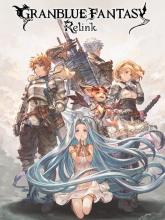
The only place where “Relink” impresses is with its presentation. It’s built in a canned engine, but it’s not one of the common, sloppy ones put out by Western corporations. Instead, “Relink” is build in a customized version of Platinum Games’ Platinum Engine. The result is a breathtaking experience that blends vibrantly colorful, yet still realistic, backdrops with three-dimensional anime characters that manage to look convincingly great from any angle. Character designs run the gamut of typical anime characters, ranging from “cute” to “cool” to “edgy” to “cringe,” but that’s why we love anime, right? Environments tend to be fairly large, and the monsters that populate them are lovingly rendered in every detail.
Really, the only downside to “Relink’s” visual presentation is that there’s not really a whole lot of it. The game fills up over 120GB of disk space, yet there are less than a dozen discrete dungeon environments, only 2 towns, and a slender bestiary of monsters that get pallet swapped and re-used a bit too much.
Audio is also quite excellent, with a variety of anime dubbers lending their talents to bring the game’s cast to life. It also has one of the better soundtracks I’ve heard in a Japanese game in quite some time. However, there are actually way more soundtrack tunes that there are environments, so there are a LOT of tracks that only get played during one particular boss variant or some similarly niche occurrence, making them less memorable due to lack of repetition, in spite of the fact that they’re excellent compositions by some of Japan’s biggest game composers (including Nobuo Uematsu, of ‘Final Fantasy’ fame).
Technically, there’s not a whole lot to complain about. “Relink” does have a pretty awful set of default controls, and they aren’t freely remappable. However, there are alternative control schemes that make the game feel generally good and intuitive to play. It supports Xinput out of the box, and the online functionality for joining coop games is pretty simple... barring the fact that ONLY side-quests are coop, and the main chunk of the game that normal people will want to play... isn’t.
Story
“Relink” picks up in the middle of the story told in the original “Granblue Fantasy” mobile gacha game, and if you want any actual context and character back stories, it requires reading through lots of text-only lore dumps or watching a handful of Visual-Novel-inspired (but even less interactive) story scenes for each character (none of which can even be completed until after the credits roll).
The basic gist of the plot is that our hero, Gran, is a skyfarer, leading the crew of an airship that sails the skydoms of a world of floating islands in an endless sky (we’ve seen that before... several times, actually). Gran’s soul is bound to a waifish blue-haired girl named Lyria due to some magical thing Lyria did to save the good captain’s life. Lyria herself is a bit of a mystery, but she seems to have the ability to summon Primal Creatures, which are sometimes worshiped as gods, earning herself the title of Shaman.
Well, it turns out that there’s an evil church (isn’t there always?) lead by a fallen angel who wants Lyria’s powers to control Primal Beasts in order to force the Primal Beast of Gateways, Angra Mainyu, to reopen a pathway back to the celestial realm – with the slight caveat of destroying the sky in the process. The bad guys kidnap Lyria, and it’s up to Gran and the rest of the crew – including an annoying Japanese ugly-cute mascot character – to save her and put a stop to the bad guys’ plans.
In its structure, “Relink” is literally nothing more than an interactive shonen anime. It hits all of the same story beats, incorporates all of the same character archetypes, and, in general, feels incredibly rote and generic for anyone with any experience with anime. The lack of organic worldbuilding makes it hard to fit the plot into a larger context for someone who hasn’t dumped 4,000 hours into the mobile game. It’s still “fine,” but it’s predictable – even without context – and never particularly interesting.
Fortunately, while the story is boring, predictable, tropey, and frequently stuffed with cringe, it’s also really, really short! The base game experience, as in going from “Press Start” to “Credit Roll” is only about 25 hours for a VERY thorough playthrough. Of course, like most Japanese games, there’s post-credits content, and getting to the “Good” ending takes about another 10 hours on top of that. 35 hours doesn’t give the player enough time to get tired of the characters or world – they are very nice to look at, after all – and the plot never hits any stagnation points where the player can feel like they’re spinning their wheels... that’s all reserved for the masochists who want to go for the “Extra Bestest” ending, which I did not, since it, allegedly, adds at least 100 hours of story-free grinding to the experience. If the only reason a game is tolerable is because the plot is constantly hurtling forward at breakneck pace, suddenly switching modes to wallow in grind, min/maxing, and collecting 1% stat improvements is like hitting a steel wall in a dragstrip racecar.
Gameplay
When I first learned about “Relink,” the only ‘Granblue Fantasy’ games I’d even heard of were the ‘Versus’ 2D Fighting titles. That lead me to the conclusion – understandably, but wrong – that “Relink” was an RPG mashed-up with a 2D Fighting game. “Relink” is 100% 3D in its design, with a party of four characters running around as a group, beating on or casting spells at monsters. There’s a lock-on feature to keep characters’ targeting on... target. Only one character can be controlled directly by the player at any given time, with the other three characters in the party controlled by AIs... and these are INSANELY COMPETENT AIS! Normally, I complain incessantly about games where I’m stuck with AI-controlled companions because they are morons who waste their magical resources and stand in the way of telegraphed enemy attacks.
The AIs in “Relink” are the absolute opposite of that – they’re so good they actually seem super-human. In the handful of side-quests where I was forced to control a specific character – who was not my regular chosen character – I struggled to cope with the fact that each character’s mechanics are so wildly different from each other. Fortunately, there’s an Assist Mode baked into the game that has NO penalties attached to it. Partial Assist reduces each character’s skillset to a single-button affair, while Full Assist has the AI take care of everything except positioning for the player’s controlled character... and it still plays with godlike skill.
Personally, I’m not a fan of melee characters in Fantasy games because getting close enough to a monster to hit it with a sword means you’re close enough for it to hit YOU too. I thus defaulted to playing as Io, a flat-chested loli-mage whose powers revolve around ranged spells that can be charged up for more damage by holding down their corresponding controller buttons. Her charges all rely on standing (mostly) still for long-ish periods of time, so when it came time for me to play as Gran and try to execute perfect dodges and parries within melee range, I was hopeless, so Full Assist mode really saved the day in those cases.
That said, outside of situations where I was forced out of my playstyle comfort zone, “Relink” is an incredibly easy game, partially due to the competent AI companions, partially due to nothing in the game really being very long or in-depth. Most “dungeons” consist of half a dozen “rooms” or less, and many, many of the side-quests literally just skip the dungeon altogether and throw the player’s team into a boss arena. The game does a good job of presenting the difficulty of quests with a Power Rating, which corresponds to a similar rating for each character. I found the game very do-able and upgrades very acquirable with a single run through each side-quest up until the “Good” ending, but I can also see where the ever increasing requirements for upgrades after that point would lead to incessant grinding.
“Relink” is one of those games where you can’t just buy new gear, you have to craft it. And, of course, it’s made from monster debris, so in order to craft stronger stuff – or upgrade existing stuff – the player must defeat specific monsters and hope they drop lots of debris so as to avoid having to replay the quest and defeat them AGAIN. I found Io’s massive magical BS attacks were really good at “breaking” enemy weakpoints and causing them to drop more loot, so I was quite happy with my chosen character, in spite of her gross flat chest.
What I was NOT happy about is the way “Relink” handles coop. There is absolutely no reason that the player couldn’t populate their party with three characters controlled by other players instead of AIs during the entire story, especially considering how little in the way of running around in town there is in this game. Instead, only specially designated side-quests, which are offered from a quest counter in the most boring and bureaucratic way possible, are available for coop. Throughout the base game, a tiny handful of side-quests are available, and playing them once each for gits and shiggles is about all they’re worth. However, almost the ENTIRETY of the “Good” ending postgame consists of doing a side-quest, then listening to the cast of characters talk amongst themselves. There is NO reason the entire game couldn’t have been like this, and thus NO reason that the entire game couldn’t have been cooperative! Instead, the only part of the game that’s heavily geared toward coop mode is the post-post-game, where grinding is life and players will find themselves figuring out how to get the game to play itself as much as possible (thank you, Full Assist Mode!) while they walk away from the screen and do something else.
Overall
Imagine, if you will, a holiday gift sitting beneath your Yule Tree, wrapped immaculately in beautiful paper with a hand-tied bow and a calligraphied name tag on it. Now, imagine opening that gorgeous package and looking inside, only to see a handful of dust bunnies and a dead cockroach. That’s the kind of experience “Granblue Fantasy: Relink” offers. It’s a gorgeous game, no doubt, but the story, such as it is, is just a chunk out of a larger narrative with no real context, while the cast of characters are complete unknowns without enough inherent charisma to make me even care enough about most of them to sit through their backstories. Combine these out-of-context aspects of the game’s narrative with all the shonen anime tropes that the plot will bear (and then a few more for good measure), and this isn’t the type of RPG that will go down in history as having a great story. Likewise, while each character feels unique to play and the mechanical systems – especially the AI-controlled companions – feel well designed, the Japanese obsession with ultra-grindy post-game content means that the main event feels incredibly short and ephemeral, almost like a prelude – or, even worse, an excuse – to jump on that endless treadmill.
Presentation: 4.5/5
Story: 2/5
Gameplay: 2.5/5
Overall (not an average): 3/5

