

Rating of
3/5
Lost... Like My Interest
Nelson Schneider - wrote on 07/28/26
Way back in the earliest days of the 7th Generation, the Xbox 360 had a brief headstart on the PlayStation 3, and someone at the Xbox Division decided that the brand needed to ally itself with some RPG studios in order to replicate the runaway successes of the PlayStation 1 and 2 after they received some exclusive RPGs from Squaresoft/Square-Enix. Unfortunately for Microsoft and the Xbox Division, they didn’t have any ins with Square-Enix, and the idea that THE name in RPGs (at least at the time) would deign to release any of its games on Xbox – a platform that has notoriously been even less popular in Japan than its global average unpopularity – let alone an exclusive game was simply out of the question.
Fortunately for Xbox, some of the old movers-and-shakers at Squaresoft had been cast adrift and were doing their own thing: Namely, Hironobu Sakaguchi (sometimes referred to by the Gaming community as, “The Guch”), the original creator of ‘Final Fantasy,’ who resigned from Square-Enix in 2003 after the cinematic disaster of “Final Fantasy: The Spirits Within.” The Guch went on to found the Indie RPG studio, Mistwalker, and continued to rehash his ideas into one-off games that resembled the classic output of Squaresoft in its heyday... if you turned off all the lights and squinted really hard. The Guch was more than happy to work with the Xbox Division, as Mistwalkers developers found the PlayStation 3 difficult to work with, while The Guch himself had a bit of a personal beef with Sony’s then-CEO, Ken Kutaragi.
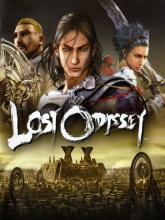
The result of this unholy alliance between Mistwalker and the Xbox Division was the exclusive release of several RPGs on the Xbox 360, one of which was “Lost Odyssey.” I, personally, never heard much about “Lost Odyssey” when it was fresh off the DVD presses, but in recent years, and thanks to Xbox’s Backward Compatibility program, there has been quite a bit of retroactive praise heaped upon this particular title. Indeed, the praise proved to be too much for me, and convinced me to grab a second-hand copy of the original game discs off of Amazon Marketplace... then proceed to play the whole thing in the Xenia Xbox 360 Emulator (specifically Xenia Edge... for Linux). I went in expecting to find the Second Coming of ‘Final Fantasy,’ a game that proved that the reason that series has been such a disaster since the early 2000s wasn’t because The Guch was the problem, but because Square-Enix allowed him to leave after one little $52 million box office loss. Instead, what I got was a game that suffers just as severely from ‘7th Generation RPG Syndrome’ as the output from every other major Japanese studio of the time.
Presentation
The Western influence of the Xbox Division on the development of “Lost Odyssey” is undeniable. It’s one of the first major RPGs out of Japan to be developed in a canned engine instead of the studio doing all of the underlying grunt-work and creating a bespoke engine... that would be used once and discarded. “Lost Odyssey” is, instead, built in Unreal Engine 3... and it definitely shows. Unreal didn’t really start to ‘git gud,’ as the trolls are fond of saying, until sometime in the Unreal Engine 4 era, and “Lost Odyssey” is generally a very drab and unappealing-looking game in spite of the obvious effort that went into designing its characters, monsters, and environments.
The game’s fixed camera angles seem to be implemented in such a way as to prevent the player from seeing just how drab most NPCs look, while also enabling a sense of tunnel-vision when navigating the (often overly-complicated) dungeons. Weirdly enough, character conversations typically involve unnecessarily dynamic camera transitions, zoom-ins, and splitscreens that make the game’s narrative aspects look incredibly dated... to the early ‘00s.
There is NO overworld to speak of, with characters instead selecting their destinations from a list while looking at an ugly, washed-out world map that is completely lacking in detail.
The cast of playable characters all have their own unique looks, though the result is a massive mixed-bag. The main character, Kaim, looks like a knock-off of a young Keanu Reeves, and the supporting cast includes a pair of annoying children who are clearly meant to be Palom and Porum from “Final Fantasy 4” with the serial numbers filed off. There are a variety of bodacious women who join Kaim’s party, but out of them, only the ex-pirate, Seth, has any real personality (though one of them is rendered in such high fidelity, the veins in her boobs are clearly visible). All of the adult characters have weirdly-elongated facial features, giving them the same off-putting look as the characters from “Final Fantasy: The Spirits Within,” with maybe a hint of “Final Fantasy 10’s” ‘we’re not Asian, but we look Asian’ designs, instead of the more abstract and ethnically-neutral style of anime. Town environments feel both cramped and unnecessarily sprawling at the same time, with numerous screen transitions required to navigate each location – most of which contain nothing of interest. Dungeons are incredibly bland and samey-looking, which makes their convoluted layouts even more difficult to navigate than the stubbornly-fixed camera.
The Guch was able to recruit his long-time associate, Nobuo Uematsu, the musical genius behind every great ‘Final Fantasy’ score, to provide the soundtrack for “Lost Odyssey,” and his talent occasionally shines through... but for the most part, the game’s soundtrack is easy to ignore and doesn’t really stir much emotion. The game is fully voiced, and the performances are mostly competent – though the villain comes off as particularly corny – but I wouldn’t say anything about the game’s audio is “great” or much above average.
Technically... well, I definitely dug myself a hole trying to play this game in an emulator... on Linux. I won’t hold that against “Lost Odyssey,” except to mention that the number of emulation bugs, crashes, and graphical issues are illustrative of just how much trouble Mistwalker had with the Unreal Engine 3. This game is relatively unique in just how many issues it has being emulated, and how many special patches it needs as work-arounds. With that out of the way, though, “Lost Odyssey” comes on 4 (FOUR!) DVDs... and most of that storage space is stuffed with pre-rendered cutscenes, instead of trying to save space with in-engine cutscenes (though there are still plenty of those). Save points are weirdly far apart, though exiting an area and re-entering heals the entire party’s HP and MP, making inns completely irrelevant (even though they’re still in the game... and still cost Gold to stay). The game is lacking in modern QoL features, such as non-active team members gaining experience while benched, or a journal to keep track of side-quests – though there is a list of ‘hidden treasures’ that keeps track of whether the player has heard about each treasure from an NPC, where it’s located, and whether they’ve collected it or not, so that’s a baby-step in the right direction.
Story
“Lost Odyssey’s” cold open drops us into the shoes of a magickal warrior named Kaim, right in the middle of a pitched battle between two warring nations. Both nations have benefited from the recent ‘magick industrial revolution,’ and have fielded a variety of steampunk war machines, while the soldiers on both sides are armed with a variety of firearms. Kaim, however, just has a sword... and midriff-baring armor. Yet he wades into combat like a man who doesn’t fear death... because he doesn’t: He’s immortal. As the battle rages around him, Kaim dispatches a variety of war machines before a meteor appears in the sky, crashes down on the battlefield, and melts everything to slag... except Kaim.
As the sold survivor of this battle, Kaim returns to report to his superiors, and we begin to learn a bit about him and his world. Not only is Kaim immortal, but he has amnesia, and serves as a secret weapon for his country’s government, since they can just wind him up and point him at a problem, knowing that nothing will kill him.
Kaim’s overseers are part of a democratic council that was installed after the king abdicated as the magick industrial revolution took off in earnest, and it’s obvious that some of them are shadier than others. Kaim doesn’t seem to care, and is as emotionally dead as so many of The Guch’s other ‘Final Fantasy’ protagonists, only perking up his ears when he hears tell of another immortal.
This other immortal is a woman named Seth, who gets scooped up by Kaim’s government overseers as a new asset, as she also conveniently can’t remember anything about her past. The two of them are sent to spy on enemy forces and figure out why a top-secret weapon is behind schedule. To keep them on track – and report back if the immortals ever start to remember anything – the duo is saddled with an incredibly annoying magickal rogue named Jansen, who fills every scene he’s in (and he’s in EVERY SCENE) with cringe.
It doesn’t take long for Kaim and Seth to begin remembering snippets of their pasts and begin trying to put the pieces together. It turns out – unsurprisingly – that one particularly odious government stooge has been keeping their memories suppressed, as well as the memories of a handful of other immortals scattered across the continent. This government stooge is also an immortal, and the story’s big twist turns out to be that every immortal in the world were originally part of an exploratory expedition from a parallel universe where time flows much faster, making 1000 years in the game’s main world equivalent to 1 year in the other world – the immortals aren’t actually deathless... they just age 1000 times slower than everyone else and take 1/1000 the damage from injuries.
After an unnecessarily-roundabout sequence of travels and tribulations, Kaim and company eventually shake off the last of their amnesiac haze and figure out what’s going on. With his compatriots reunited and their memories recovered, plus a handful of mortal/native sidekicks, Kaim sets out to stop the maniacal plans of his former colleague to elevate himself to godhood by absorbing the emotions from mortals and destroying the portal back home.
While this storyline is fairly tropey and not particularly interesting in and of itself, most of “Lost Odyssey’s” ardent fans will proclaim that the Dream Stories – which represent snippets of Kaim’s, Seth’s, and the other immortals’ memories coming back to them – are where the real narrative greatness lies. These Dream Stories are little side-vignettes that are unlocked by going to specific places or talking to specific NPCs, and can be read at any time from a menu. And, yes, I do mean that they can be “read,” as the Dream Stories themselves are entirely text based. I did NOT find these vignettes to be particularly engaging, but rather found them about as interesting as sitting through a Hypercard presentation back in the ‘90s (hint: Hypercard was a MacOS precursor to things like Powerpoint and other presentation software). The writing in the Dream Stories is overly repetitive, and each of them is about 2-3 times as long as they need to be to get their point across. Worst of all, only a handful of them add valuable meat to the bones of the cast’s backstories.
I took about 70 hours to slog through “Lost Odyssey,” but I know at least 20 hours of that was spend grinding, while half of the non-grinding time I spent with the game involved watching pre-rendered cut-scenes and reading Dream Stories. So that shakes out to be a roughly 25 hour experience, stretched and padded to more than twice what it should have been. I was quite bored with “Lost Odyssey” by the half-way point, and really had to force myself to finish it.
Gameplay
“Lost Odyssey” is a fairly bog-standard Turn-Based RPG with only a handful of somewhat-novel mechanics. Party size is a fairly robust 5 characters... but there are actually 9 characters in the playable cast, so roughly half of them will be benched (and not gaining experience or skill points) at any given time. Characters queue up their actions at the start of each turn, and then player and enemy actions play out based on things like initiative and casting times, but with no preview of how the turn order will ultimately play out.
Physical and magickal attacks are wildly different in “Lost Odyssey,” with physical attacks benefiting from equippable Rings that add a timed button press (really a timed release of the right trigger) to add bonus damage and up to three possible bonuses from the character’s equipped Ring. Magickal attacks do not benefit from Rings at all (and caster characters don’t deal enough physical damage with their attacks to make Rings relevant for them), and are further hampered by long casting times that make multi-target spells all but worthless, as the team’s physical attackers will have stabbed all of the enemies to death before the spell in question goes off. In the early game, these casting times are so bad, that it can take 2-3 entire turns to cast a single high-ish level spell.
Character building tries to give the illusion of depth, while ultimately ending up fairly shallow. Each mortal character in the cast learns a variety of skills as they gain levels. Immortal characters don’t learn any skills by leveling-up, but must instead use a Skill Link to a mortal character in the active party to learn skills from the supporting cast. Each mortal character has their own specialties, and having the two physical attackers in the immortal cast learn a bunch of Black Magic and Spirit Magic when they don’t have the stats to make it useful is pointless, just like having the two immortal casters learn physical attacks. In addition to learning skills from other characters via Skill Link, immortals can also learn skills from accessories, reminiscent of the system from “Final Fantasy 9,” except less focused. Each character can equip one accessory at a time and learn that accessory’s skill by earning Skill Points after battles – just like Skill Link skills. Unfortunately, for most of the game, Skill Points come at a trickle, and grinding out all of the skills available to the party at any given time becomes tedious – but you never know what skills you’ll actually need... unless you’re using a guide or are on a second playthrough. Each immortal character has a number of Skill Slots – which can be increased with rare consumable items – and can freely mix-and-match any skills they’ve learned for some genuinely great free-form buildcrafting... but it’s pretty obvious which skills are best-in-slot, and the plethora of anti-status skills are annoying to swap out when moving from an area where, for exanple, enemies love to spam poison skills to an area where different enemies love to spam petrification skills.
As if the slow speed of learning skills wasn’t annoying enough, “Lost Odyssey” also puts a cap on how high a character’s level can rise by fighting certain enemies, so all that SP grinding won’t necessarily give the party a leg-up with their overall character levels either. The cherry on top of this grinding hell is the inconsistent random encounter rate, which seems custom designed to make encounters few and far between when the player just wants to grind out a few skills, while ensuring a battle every-other-step when trying to navigate a particularly confusing and obtuse multi-level dungeon layout.
While none of the game’s systems feel particularly good to use in the early game, by the late game, things start to blossom into a mildly interesting system that’s fairly easy to min/max. One of the supporting characters provides skills (learnable via Skill Link AND benefiting the whole party if one person has the skill) that double Skill Point gain, experience gain, and gold gain, while some valuable accessories provide the immortal cast with full status immunity and elemental damage immunity. There are even skills that reduce casting time to reasonable levels, making spells finally start to feel useful... except when bosses decide to clear all buffing spells as a counter attack...
Overall, though, “Lost Odyssey” never gave me the feeling of wanting to explore the world and fight a variety of monsters like the best ‘Final Fantasy,’ ‘Dragon Quest,’ or even other, more recent RPGs did. This is, sadly, because the world feels so incredibly small and uninteresting, while each area only has a handful of fixed enemy groupings in its random encounter table. Not even gaining access to a ship (or two) manages to invoke the sense of scale that an old game like “Final Fantasy 4” managed to do with much simpler visuals.
Overall
“Lost Odyssey” is, sadly, 100% a product of its time – the dreadful 7th Generation, when the RPG genre up and died. Between the mediocre Unreal 3-powered visuals, overreliance on cutscenes, lack of an overworld, and dungeons that are either boring or convoluted, “Lost Odyssey” doesn’t offer a particularly compelling world to explore. Top that off with a tropey narrative that tries to prop itself up with long-winded story vignettes instead of proper character building, and the whole thing just comes off as a tedious, repetitive slog with no real payoff. I suppose if you were an Xbox fan in 2008 and had never seen an RPG before, coming into contact with “Lost Odyssey” might have opened your mind to things beyond “Halo,” but long-time role-players and genre connoisseurs won’t find much here to get excited about.
Presentation: 3/5
Story: 3/5
Gameplay: 3.5/5
Overall (not an average): 3/5

