

Rating of
4/5
Don’t Let the Everdoor Hit You as You Leave
Nelson Schneider - wrote on 03/31/26
“Spiritfarer” is the third genre-bending title by the French-Canadian Indie studio, Thunder Lotus Games. I’ve been tricked into playing their two previous games and didn’t particularly enjoy either one, and I was similarly tricked into buying “Spiritfarer,” as I simply looked at the rave reviews from critics and players alike, without paying attention to who made it. Usually I’m willing to go with a baseball analogy and give a studio “three strikes” before they become anathema to me, so “Spiritfarer” was Thunder Lotus’ last chance to convince me they have any talent. And while it isn’t quite a home run, “Spiritfarer” is definitely Thunder Lotus’ best effort, in spite of its flaws.
Presentation
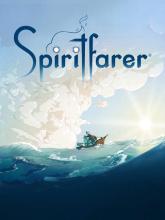
Thunder Lotus’ primary claim to fame has always been their art department and their signature style of hand-drawn animation. That style is back on full display in “Spiritfarer,” and looks absolutely incredible. “Spiritfarer” (and all of Thunder Lotus’ other games) looks like a classic cartoon, like something ripped out of the 1980s and transplanted as-is into modern gaming. It is a testament to the power of truly great art direction that it can give a game much greater staying power and leave a more potent lingering impression on the player by having a unique, beautiful, and polished look, rather than simply shooting for the moon with a photorealistic style and completely missing the mark. A beautiful art style can also go a long way in covering-up and distracting-from other aspects of the game that aren’t quite up to snuff.
Audio is largely overshadowed by the visuals in “Spiritfarer,” but is still nothing to sneeze at on its own. The game is unvoiced, with characters instead speaking a variety of warbling gibberish in their own unique voices (which makes localization much easier). However, the soundtrack is quite pleasant and evocative of the myriad emotions the game tries to squeeze out of its audience.
Technical presentation is the only place with a few tiny cracks, but nothing that’s worth deducting any points. “Spiritfarer” is built in babby’s furst game engine, Unity, and comes with a handful of Unity quirks, as anyone who has played more than one Unity game would expect. It supports Xinput out of the box, but wouldn’t recognize my Xbox One Elite controller in Linux, so I had to use SteamInput. On top of that, the controller mapping is a bit strange and non-standard, with the X button acting as the “confirm” button, which I haven’t seen since the last RPG Maker title I played.
Story
“Spiritfarer” puts the player in the shoes of Stella, a girl who, accompanied by her cat, Daffodil, finds herself face-to-face with Charon, the Greco-Roman ferryman of the dead, who has decided that it’s time to pass that mantle onto someone new – and that someone is Stella. Gifted with a powerful artifact, dubbed the Everlight, that can transform into any tool she may need, Charon leaves through a mysterious portal – the Everdoor – at the center of a vast sea, leaving Stella on her own to figure out her new job.
She quickly comes across a small island, where she runs into the spirit of her late friend, Gwen, who has mysteriously taken the form of an anthropomorphic deer. Gwen seems to know a bit about the area and guides Stella to a shipyard operated by a shark-man named Albert (who loves to tell Dad Jokes – and laugh at his own Dad Jokes), where she receives a large sailing ship to replace the little dinghy she started with.
Stella soon finds herself sailing around the mysterious sea, stopping at a variety of islands populated by vaguely-defined spirit people, and occasionally bumping into more departed people from her past – each of whom transforms into an anthropomorphic animal and takes up residence aboard Stella’s ship. It seems that it is our heroine’s responsibility to help these important people from her past overcome their lingering traumas and, eventually, usher them through the Everdoor into whatever awaits on the other side. Through exploring her relationships with these spirits, the player will also learn about Stella’s history, and the ultimate fate that awaits us all.
Many other reviewers have praised and glazed “Spiritfarer” for the emotional quality of its storytelling. These same reviewers – both professional and amateur – have commented that “Spiritfarer’s” variety of vignettes involving Stella’s relationships with the spirits from her past have sent them into apoplectic bouts of weeping. While it is clear that “Spiritfarer” wants to be a tear-jerker, similar to the likes of “To the Moon” and “Finding Paradise” by Freebird Games, I didn’t find it to have a whole lot of emotional impact. Instead, I spent most of my time with “Spiritfarer” confused, performing mental gymnastics trying to piece together bits of lore and conversations in order to figure out just how the various spirits were related to Stella’s life, who they were to her before they died, and why they all take the form of animals (that last one is NEVER explained). It seems that a LOT of the heavy lifting in “Spiritfarer’s” character lore is done by the optional digital art book released alongside the game, which does include backstories for every character – but also feels like a huge pile of spoilers for anyone consulting it before finishing the game.
Regardless, even if it didn’t have me sobbing uncontrollably, “Spiritfarer’s” story does present a compelling mystery, and that kept me thoroughly engaged with the game for 40 hours, which is a significantly beefier runtime than most Indie games.
Gameplay
“Spiritfarer” is a genre-bent mashup of the ‘Cozy Game’ style of community management Sim – similar to things like “Stardew Valley,” the ‘Harvest Moon’ series, or *shudder* Nintendo’s ‘Animal Crossing’ – and 2D Platforming, with a heavy dose of Visual Novel-style relationship building. Stella’s ship, which starts out relatively small, but which can/must be upgraded throughout to course of the game into a seafaring behemoth, serves as her homestead, and can be populated with a unique house for each spirit that joins the crew, along with a wide variety of utility buildings. These other buildings range from resource-producing things like fields, gardens, orchards, and animal stalls, to refineries that allow Stella to transform raw materials into more complex products. Gaining access to additional buildings is largely tied to buying extra sets of schematics from Albert’s Shipwright Shop, with spirit houses and a handful of other specific buildings tied to story progress with specific spirits.
Stella’s ship starts at a location roughly at the center of a vast and mysterious sea, which can be explored freely by choosing destinations on the navigation map. The sea is filled with populated islands, where Stella can take on side-quests, meet new spirits, and harvest regenerating resources that can’t be cultivated on-board the ship. These islands also hide a small number of shrines, each of which will grant Stella a new platforming skill, Metroidvania-style, in exchange for two Obols paid to her by spirits coming on board her ship. The sea is also spattered with randomly occurring events, which allow Stella to engage in one of a variety of platforming mini-games in order to harvest rare resources that can’t be collected in any other way. While the ship itself, the islands, and all of the platforming in the game are presented from a 2D sidescrolling perspective, the navigation map is top down, which creates a fairly unique relationship between the player’s perspective and the in-game locations.
While Stella will spend obscene amounts of time in-game watering plants, harvesting crops, and playing somewhat tedious crafting mini-games, actually progressing the story and helping the various spirits who board the ship revolves almost entirely around talking to them, feeding them foods they like, hugging them, and traveling to various places in the game world to perform errands for them. Spirits’ moods can fluctuate based on all of these factors, with unhappy spirits causing trouble on board the ship and happy spirits doing little favors for Stella (mostly giving her free resources).
Though the sea looks like it is freely navigable from the outset, it actually includes a variety of barriers – ice, rocks, and fog, specifically – that require ship upgrades to pass through. These upgrades typically require very rare resources that can only be obtained by completing a spirit’s story and sending them through the Everdoor, so the gameplay encourages players not to hoard their dearly departed friends, but to complete their requests and help them pass on as efficiently as possible.
Ultimately, though, the gameplay is the weakest link in “Spiritfarer’s” total package. The ‘Cozy’ elements are incredibly repetitive and demanding – it seems like crops need to be watered CONSTANTLY... even when it’s raining! – and the mini-games to process raw materials into products get tiresome very quickly. Even the platforming challenges rapidly become the type of thing to sail around and avoid if the player isn’t currently in need of a platforming-specific resource, and if the player IS in need of such a resource, the time gaps between the challenges and the paltry amounts of their specific resources they typically award are quite disgruntling.
Overall
While Thunder Lotus Games has always impressed me with their artistic prowess, hand-drawn visuals, and somewhat idiosyncratic storytelling, their games have always fallen short as, well, games. “Spiritfarer” doesn’t really change my opinion of the studio, as it still exists within that same rut of amazing presentation, decent story, and ‘meh’ gameplay. Though I’m not a fan of either ‘Cozy’ Sim games or Roguelites, I’d rather deal with ‘Cozy’ stuff, making “Spiritfarer” significantly more enjoyable than its predecessor, “Sundered.” I’d even go so far as to say that I would actually recommend “Spiritfarer” to others. It’s definitely not the most emotionally engaging or devastating Indie game I’ve played, nor is it the most mechanically interesting. But it is unique, and it kept me engaged for longer than I expected, so it’s definitely Thunder Lotus’ best.
Presentation: 5/5
Story: 4/5
Gameplay: 3/5
Overall (not an average): 4/5

