

Rating of
2.5/5
Passion =/= Talent
Nelson Schneider - wrote on 12/26/25
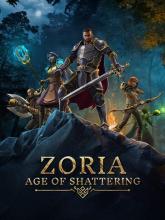
I am always on the lookout for the next great cRPG. This has lead me to having a Steam library (and backlog) filled with RPG Maker projects and Kickstarted Indie games that simply don’t measure up to professionally made games or officially sanctioned tabletop RPG conversions. The most recent such game to find its way into – and, in a rare surprise, OUT of – my backlog within a year of its release is “Zoria: Age of Shattering” (“Zoria”), which caught my attention when the Romanian-based Indie studio behind it, Tiny Trinket Games, avowed that it would be a party-based, turn-based game, similar to the greatest classics of the genre. Somehow I seem to have conflated this cleavage to traditional RPG mechanics with being based on some flavor of Dungeons & Dragons, which caused me to be far more willing to buy sooner rather than later.
It also caught my attention that, unlike the higher-profile cRPGs being released recently, “Zoria” is a definitively single-player experience, allowing me to get sucked into it for hours on end, rather than being forced to nibble away at it in 2-hour chunks for a year with the rest of the Crew and their bloated schedules. Of course, going into “Zoria” immediately after finishing “Baldur’s Gate 3” probably had me overtuned with a specific set of expectations, and primed for disappointment.
Presentation
“Zoria” is made in the Indie developers’ favorite first-game engine, Unity, and it truly looks and feels like a Unity project in every way. Character designs are entirely bland and lacking in anything resembling personality. It’s almost comical how undifferentiated everyone in the game is, looking like little more than a Monty Python peasant sketch where everyone is so covered in mud that they all look the same. Some characters have different skintones and some characters have crazy colored Feminism hair, but they all have the same dead-eyed, emotionless profile pictures. Environmental design doesn’t fare much better, with the exceptionally small amount of locales in the game world feeling less like intentionally-crafted, handmade locations, and more like cobbled-together stages created in a user-generated content system, like “LittleBigPlanet” or “Roblox.” Not even the enemy designs feel particularly interesting, with plenty of boring, basic critters, enemy soldiers who all look the same except for the weapons in their hands, and a number of crummy-looking elementals and golems topping of the rather paltry bestiary.
Audio also feels like it came straight out of a can purchased on the Unity asset store. There are some good tunes in the soundtrack, for sure, but they often feel out-of-place, especially the jaunty travel music that sometimes-sometimes-not plays while wandering around the forest in the main hub area. While the soundtrack feels like good, canned content applied with too broad a brush, the limited voiceacting feels like it shouldn’t have been put in at all. Very few characters have voiced dialogs, and the spoken bits never include the entirety of the text in the text box. As the game moves on past Act 1, the only spoken dialogs come from a couple of key NPCs and the narrator, often popping up abruptly and awkwardly. Maybe Tiny Trinket Games can release an update that adds AI-powered voiceover for all the game’s text to make the experience a bit more consistent.
Technically, “Zoria” is not nearly as impressive as it wants to be. While it’s true that a lot of these Indie cRPGs lean into Typewriter Master Race stereotypes, “Zoria” includes Xinput support right out of the box... that it fundamentally broken, and prevents the player from interacting with roughly half of the interactable quest objects throughout the course of the game. I had to play “Zoria” using my old Rev 1 Steam Controller so I could hold down a button to turn on “real mouse mode,” which would let me click on things that controller mode simply wouldn’t. Aside from that major flaw, the game at least runs stably, has relatively speedy load times, and includes a useful map. The only significant quest or progression bug I encountered was with the arena, where one enemy not aggroing to the party and joining the battle caused the battle to end prematurely and the reward chest for that bout – and all subsequent bouts – to fail to appear.
Story
“Zoria” suffers from Generic Fantasy-itis to an extreme degree. Since Tiny Trinket Games didn’t buy the IP rights to an existing campaign setting or hire a quality writer like Chris Avellone to make up a new one for them, the entire game feels very much like a bland homebrew tabletop setting, where the Dungeon Master pulls overly-long proper nouns out of his rear-end, thinking that they sound fantastical and cool, when they really don’t.
“Zoria” is set on the blandly-named continent of Erevrand, and the cold-open introduces us to our main character, Captain Witherel (who can be male or female, and belong to any of the game’s classes, at the player’s discretion) of the Elion armed forces. It turns out that Elion has been on the losing side of a war instigated by the Izarian Empire, who have been using overwhelming magics – and especially super-potent necromancy – to overrun all of Elion’s defenses. We are told – not shown – how Elion was in control of a vast network of fortresses – called the Black Chain – that were leftover after the world’s last great war against demons. Yet the Izarians’ new magic allows them to take these fortresses effortlessly, oftentimes using the Elionians’ own cemeteries against them.
After staving off an attack long enough for some higher-ups to escape, Captain Witherel suddenly finds him/herself placed in charge of a small, run-down, and forgotten fort, tasked with building up the defenses in the immediate area under the noses of the Izarians without drawing attention to this fact. Thus, Captain Witherel must gather resources and recruits to repair the run-down fortress, clear the area of bandits and hostile wildlife, and also launch expeditions into hostile territory to figure out how the Izarians suddenly became so powerful, what they want, and how to stop them.
The result is a narrative that wants to combine the army/kingdom management aspects of a game like “Pathfinder: Kingmaker” or the classic ‘Suikoden’ games, with the four-man party exploration, dungeon crawling, and tactical combat of the classic Infinity Engine cRPGs from InterPlay’s heyday. And “Zoria” doesn’t pull-off any of this well. Dialogs are boring and repetitive, with small, uninteresting ‘trees’ that don’t really branch, but just give NPCs more opportunities to vomit pages of boring expository drivel. None of the recruitable NPCs really have personalities or anything to make them memorable other than being “x class, y level.” There are a tiny number of “choices matter” moments, that ultimately boil down to completing a couple of optional side-quests to unlock the dialog choice for the ‘best’ ending.
But absolutely nothing in the game has any personality, no matter how much ink was spilled in the course of writing boring lore-dumps and overly-long conversations. It’s truly baffling that the inexperienced writers working on D&D campaign settings in the ‘70s and ‘80 could evoke a sense of wonder and mystery with their proper nouns, place-names, and the basic look of their NPCs, while “Zoria” tries so hard, but only ends up feeling like the first draft of a script for a bland, generic B-rate Fantasy movie.
“Zoria’s” narrative unfolds over 5 Acts and takes around 40 hours, but I was already bored and checked-out by Act 3. The front-loaded lore-dumps never pay out, none of the side quests offer any significant intrigue, and even the “shocking revelations” of the main storyline have already been done before (and only slightly better) by Obsidian Entertainment in their games. And that’s ultimately the worst condemnation I can lay at “Zoria’s” feet regarding it’s story: It feel like a turn-based “Icewind Dale” in how little of interest there in in the storytelling and how much it tries to overcompensate for this lack of interest with an endless treadmill of repetitive combat.
Gameplay
“Zoria” prides itself on being like a classic, turn-based tabletop RPG. And by that, it means that it has combat, more combat, and then some extra combat on the side. Unlike the pinnacles of the genre, there’s no stealth or stealing mechanics, no persuasion/deception/intimidation via dialog options, and not even very much combat strategy in all of that combat.
There are a plethora of character classes available to choose from, but the way they are designed, it’s very obvious that the intended way to do combat is to have one tanky character who taunts all of the enemies into attacking only them, while the remaining 3 party members are casters or archers who pummel the taunted enemies with ranged attacks until they die. I found the Lancer class to be absolutely insane in the Taunting Tank use-case, and easily obliterated every combat encounter in the game once I started using one. Indeed, the only time I even came close to a party wipe was in an early side quest where I stumbled upon three ghost enemies who could spam multiple area attacks each turn, and whose initiative allowed them to go before my party every turn, but I got around their excessive mass-damage output by having my party guzzle potions – which doesn’t consume any action points – to recover while I whittled down one ghost at a time.
Perhaps the greatest offense with the battle system, though, is the fact that the player is never given the opportunity to launch surprise attacks, or even truly determine where their characters will stand as combat commences. The party has a marching formation – which can be customized by the player – and will always assume a rough estimation of this formation when combat starts. However, if Captain Witherel is NOT the party’s melee tank (read: Lancer), the party will get all mushed together while walking around and sort of ‘unfold’ into combat formation. There’s also no way to flee from combat, and once an enemy spots the party, they WILL give chase until they catch up or the party runs out of map space – though this does provide for the opportunity to peel off enemies from large groups one at a time.
While it is not feature complete, the combat system is also quite basic. Each turn, a character gets 7 meters of free movement and two action points. One action point can be consumed to perform a basic attack or gain an additional 7 meters of movement (for a total mix-and-match of up to 21 meters of movement and up to 2 basic attacks per round). Each character class can also learn a variety of skills from a two-pronged skill tree that consume action points and two other resources. Casters have mana as a secondary resource, while non-casters have energy – they both do exactly the same thing, but are restored by different potions. The third resource is focus, which is built up by performing basic attacks and lingers between battles but drains when resting. Nearly every skill in the game requires both mana/energy AND focus to perform, along with one or both of that turn’s action points, but generating focus and maintaining reasonable levels of mana/energy is trivial and not really something that requires dedicated strategy or management. Characters’ turn order is determined by an initiative roll each turn, and characters (or enemies) that roll particularly high initiative get a bonus action point that turn, while characters who roll poorly on initiative will actually lose one of their action points. Furthermore, each attack has a damage type, and many enemies are flat-out immune to certain damage types – which was incredibly irksome when I found that nearly all beast monsters and elementals were immune to my Druid’s (Wind Walker) ‘Nature Element’ basic attacks – while some are weak to specific damage types.
“Zoria” isn’t completely without non-combat mechanics, however, as each of the game’s classes has a unique resting perk, that allows them to do something for the party while resting to recover health. Once again, the Lancer shows how overtuned it is as a class by providing free equipment repairs – because, of course the game has weapon and armor durability – while other classes remove lingering debuffs or provide other minor, inconsequential temporary bonuses. In addition to the resting perk, a number of the classes have environmental perks that allow them to overcome various obstacles in the game’s environments. However, the most essential of these perks can be replaced with consumable ‘kits’ that allow the party to perform the corresponding action once without having a member of the required class in the party. Lancers, of course, have Demolition, which clears rocky blockages, Wizards can Conjure magic bridges, Priests can clear cursed zones, Kingsmen can operate mechanical gears (for some reason?), etc. There are no skill checks involved with these skills, merely the required presence of the correct class in the current party.
Recruiting party members is quite easy, as they tend to show up randomly at the central fort that serves as the game’s hub. Unfortunately, these characters aren’t all leveled to match Captain Witherel, so early on, most recruits are really low level, and it takes quite a bit of fooling around with side-quests and dumping money and nebulous ‘supplies’ into fixing various parts of the fort in order to get higher-level recruits to show up. None of these recruits is necessarily ‘better’ or ‘worse’ than any other, but having the opportunity to swap out a level 9 character with a level 16 character (with no hard level cap, but roughly enough experience in the game to hit level 21-ish) is a BIG upgrade.
And while there are a ton of bland, samey characters to recruit whose only real differences are their starting levels, the loot system is even more overburdened with mediocrity and ‘quantity over quality.’ Loot in “Zoria” is very ‘Diablo’-styled, with color-coded rarities, level requirements, and nonsensical stat boosts randomly slapped onto everything. There is a butt-ton of loot everywhere in game, scattered around the environments and dropped by enemies – and most of it is so crappy and bland that just sorting through it in the inventory is a chore. Instead, the player is encouraged to collect blueprints and craft their own weapons using the wide variety of randomly-spawning, perpetually-regenerating resources that clutter the world map to add the exact bonuses to each piece of equipment to get the most out of each character. While I never had trouble with most enemies being too difficult, combat did tend to drag out for far too many rounds, with my party and enemies trading too many blows and not really making much ground. After I crafted a few pieces of mid-teen leveled gear specifically for my main four party members (a Ranger, Lancer, Druid, and Priest), I just started curb stomping everything. Even the final boss – a delusional god – didn’t stand a chance against the overwhelming power of... hand-crafted, blue-rarity mid-tier gear.
Overall
When I started playing “Zoria: Age of Shattering,” I was almost immediately disappointed. Unfortunately for me, this dreary first impression of the game was NOT entirely caused by contrasting it directly with one of the best cRPGs of all time, but by the fact that “Zoria” is just an incredibly bland, drab, unexciting game, with mediocre writing, dubious mechanical balance, and nothing truly attention-grabbing in the entire package. While it takes gumption and passion for a team of 3 Romanians to attempt to make a blockbuster RPG, it also takes talent – writing talent, artistic talent, and a familiarity with game design fundamentals – to make the final result pan out. Sometimes such talents can be honed with practice, but most of the time, that mercurial ability to spontaneously make a great role-playing experience is just “there” from the outset... and, sadly, Tiny Trinket Games doesn’t seem to have the magic touch.
Presentation: 3/5
Story: 2/5
Gameplay: 2.5/5
Overall (not an average): 2.5/5

