

Rating of
4.5/5
Second Verse, Same as the First
Nelson Schneider - wrote on 11/29/25
After their destruction at the hands of Google’s ill-fated Stadia streaming service, it seemed that we were destined never to see or hear from the ex-Ubisoft employees who formed the Indie startup, Typhoon Studios, ever again. Fortunately, they were able to take the legal system by the horns and extricate their ‘Savage Planet’ IP from Google. Being ex-Ubisoft-turned-Indie developers, the folks at Typhoon were already well-versed in the process of creating a new studio from nothing, thus they were able to fairly quickly take their team, their IP, and a bit of old-fashioned gumption and create their second Indie studio, Raccoon Logic.
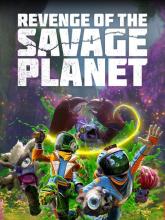
I thoroughly enjoyed the original ‘Savage Planet’ game, “Journey to the Savage Planet,” and in my review of it, lamented the minefield of corporate nonsense Typhoon had to go through, but was gladdened that they would be back under a new name with a sequel. That sequel is “Revenge of the Savage Planet” (“RSP”) which, in spite of feeling a bit like an asset flip or photocopy of the original at times, still manages to capture everything I loved about the original game, while adding a few new tweaks and spins of its own.
Presentation
“RSP” is, like its predecessor, built in the Unreal Engine. However, this time around, it’s the latest hotness of Unreal Engine 5, instead of 2020’s oh-so-out-of-date Unreal Engine 4. The sequel looks just as vibrant and quirky as the original, with a variety of new, returning, and slightly-remixed alien wildlife, flora, and ecosystems to scan, hunt, and capture. Unlike the first game, which was one huge, seamless open world sandbox, “RSP” takes place across 4 significantly smaller planetary sandboxes, which feels like a bit of a downgrade at times, and it’s unclear if dividing the game into 4 separate maps instead of taking a little bit of time to graft all of those biomes together into a single map is a design choice or an Unreal 5 limitation. Also unlike its predecessor, “RSP” is played entirely from a third-person perspective, instead of first-person. The design team claim they made this change both to give the player character more visual personality and to make the game’s prolific platforming sections more playable, and I have to say that the perspective change was a success in both areas.
Audio is incredibly similar to the first game, with a mostly subdued soundtrack that rarely makes itself known (outside of the hilarious ending theme song, which is all about how great it is to waste company time by taking a poop for 40 minutes every day at work), plus a variety of helpful sound cues that serve gameplay purposes. The game is fully voiced, with the player character accompanied by an AI drone, called E.K.O. who can either sound like a woman (default) or a man. Major dialogs are conveyed through a mix of voiceover and full-blown live-action cutscenes, which are all incredibly well done.
Technically, “RSP” manages to sand-off all of the little rough spots that plagued the original game. I had no crashes, no glitches, no hiccups, not even a single frame drop. The game just works, it has native controller support, generous auto-saves, and all the Quality of Life features one would expect from a modern title. There are a variety of optional modes, with “Classic” being the de-facto way to play the game, but with other choices like the return of the rage-inducing “Old Game Minus” mode, a true sandbox “Remix” mode, an a mode that claims to have something to do with Bingo, but those are all take-it-or-leave it and fully optional (there aren’t even any Steam achievements tied to them). The only paid DLC available is the “Cosmic Hoarder Edition” content, which adds a short side-questline that culminates in an alternate ending. The rest of the game’s various cosmetics, add-ons, and updates have been free extended support releases, which is really nice to see in an era of gaming where those types of things get monetized TO DEATH.
Story
“RPS” is a direct sequel to the original ‘Savage Planet’ game, and picks up roughly a century later, with a new lost astronaut who awakens from cryo-sleep only to discover that their employer, Kindred Aerospace – the 4th-Best Space Exploration Corporation – has been acquired by a different corporation, Alta, which is a thinly-veiled parody of Google. Like Google, Alta loves to acquire, then shutter all sorts of smaller companies in a wide variety of business sectors, and has decided that space exploration is no longer something they wish to pursue, so all of the astronauts have been fired... 100 years ago. Thanks to human life extension techniques, however, Martin Tweed, the ex-CEO of Kindred Aerospace is still alive, morbidly obese, and enraged at both the monotony of retirement and the abuse of his company and employees at the hands of Alta.
Learning that one of his beloved employees is still alive and stuck in a far-flung solar system, Tweed sets about “assisting” our lost astronaut by providing “helpful” advice on how to repair a wrecked Kindred Javelin spaceship into “good enough” condition to return to Earth... in another 100 years... Yeah, space travel is fun! Tweed also has a full side-story wherein he discovers that Alta doesn’t just liquidate businesses, sub-divisions, and assets when they are no longer useful, but also employees, and thus sets our lost astronaut on the trail of sleuthing-out where Alta has jettisoned its dirty secrets into deep space – coincidentally to the same star system Kindred was already in the process of exploring before their acquisition.
The Cosmic Hoarder Edition of the game includes a (very short) set of optional missions, in which the player character is contacted by a not-so-mysterious benefactor – and obvious dev-team stand-in – and encouraged to track down 5 pieces of a mysterious technological key. This side-story leads to a climactic boss battle – which is absent from the normal game’s ending – and alternate ending, which is amusing, but probably a bit overpriced at $10.
In general, “RSP” feels very much like what you’d get if you put “Metroid Prime” and the movie “Idiocracy” into a blender. The world building for the Savage Planet(s) would feel isolated and oppressive if not for the fact that the solar system is littered with human spaceship wreckage and garbage, while our lost astronaut is constantly receiving audio calls from people at Kindred and Alta. The world building of the game’s overall context, however, paints a dismal picture of humanity’s future, with ads (some of which are, unfortunately, recycled from the first game) constantly playing on the player character’s home base computer, revealing that, outside of a handful of corporate elites with genetically modified giant brains, EVERYONE back on Earth seems to be a gibbering idiot, out to scam everyone they can, or both.
It’s obvious that the team at Raccoon Logic was inspired by their own experiences with Google, corporate buyouts, IP law, and other late-stage Capitalist shenanigans when writing the story for “RSP,” as the satire sometimes feels less like satire and more like personal grudges and ax grinding. This seething hatred for Google/Alta simmering just beneath the surface ultimately hurts the narrative, making it feel less universally funny, and causing the main villain to do some bizarre and nonsensical things that left me scratching my head. While it starts out genuinely hilarious, by the end, the story starts to stumble over a sequence of non-sequiturs to the point where it actually stops being funny and flips fully into “cringe” territory. (But at least it’s not Woke!)
Raccoon Logic thinks that “RSP” takes about 15 hours to complete (based on the ranting of the optional final boss). However, I tried to do, see, and find everything I could, and ended up spending 20 hours in Raccoon Logic’s satirical, dystopian future. While some of the satire fell flat, and some of it felt too rehashed from the first game, overall I had a great time with “RSP,” and never found myself bored or wishing it would just end already.
Gameplay
“RSP” is, like its predecessor, very reminiscent of Nintendo’s ‘Metroid Prime’ series, being a connected-world Metroidvania-style exploration-based game, filled with pistol combat, platforming puzzles, and a plethora of hidden upgrades. “RSP” fixes both of my primary critical complaints about the first game: Firstly, “RSP” is a third-person game, making both combat and platforming feel more comfortable, as the player can easily see where their character’s feet are and whether or not their character will hit a ledge at the right angle and height to grab it and mantle up. Secondly, there is now a very thorough map screen that – with the right suit upgrades – keeps track of where the player has spotted rare items and collectibles, but didn’t actually collect them for whatever reason (usually an obstacle and lacking the proper item to overcome it).
With those two major improvements to the core gameplay, “RSP” changes very little else. The player still starts with a crappy pistol (that eventually can be upgraded to a non-crappy pistol) and weaponized food-alternative that can be used as bait to make enemies group together or attack each other. Standard Metroidvania upgrades like the double-jump (and triple-jump, and quadruple-jump) and grappling hook are scattered along the main story route and handed out at a brisk pace, ensuring that the player will rarely have time to feel frustrated by not having the right tool to pick up an optional health upgrade. Teleporters are scattered around all four open-world sandboxes, ensuring that the player is rarely far from a shortcut back to the base and the 3D printer that consumes the same 3 common mineral resources and rare 3D printer slurry to create upgrades as in the first game.
In general, “RSP” is to its predecessor as “Super Mario Galaxy” and its sequel are to each other. “RSP” literally feels like MORE of the same, with only a little bit of innovation in the form of spit and polish. Unfortunately, whereas the original ‘Savage Planet’ game felt truly open and exploratory, the Ubisoft roots of Raccoon Logic’s staff show through a bit more in the sequel, as the main storyline and mission chain in “RSP” definitely feels like it’s leading the player by the nose (or dare I say, by the hand) in finding the necessary upgrades to make progress, slapping big, old waypoints on them and tending to “tell, not show” when it comes to the AI companion, E.K.O. being a chatterbox and beating the player over the head with fairly obvious information. In addition to leading the player a bit too hard, the rest of the game feels generally easier than the original. The only times I actually “died” (and had to go retrieve my lost box of resources that weren’t automatically deposited in the 3D printer upon returning to base) were when I had to intentionally kill my character in 4 specific ways in order to satisfy the conditions for an annoying side-quest for an annoying idiot. I did come close a couple of times during the Cosmic Hoarder Edition alternate ending against some enemy gauntlets and the not-so-secret secret boss, but I very rarely felt like my character was in real danger.
Overall
“Revenge of the Savage Planet” doesn’t quite manage to surpass its predecessor in overall excellence, suffering from a narrative that goes off the rails toward the end and exploratory gameplay that feels more railroaded and less player-driven. However, little improvements go a long way in balancing out the rough patches, resulting in a game that’s one part “Metroid Prime,” one part “Idiocracy,” and one part Ubisoft-style Sandbox, which is wholly enjoyable. I’m glad to see that Raccoon Logic was able to pick up the pieces and continue right from where Typhoon Studios left off, and I’m looking forward to seeing both the future of the ‘Savage Planet’ IP, as well as whatever other original ideas they can come up with.
Presentation: 4.5/5
Story: 4/5
Gameplay: 4.5/5
Overall (not an average): 4.5/5

